Plantar Fasciitis Treatment in Chicago, IL
Burning heel pain keeping you off your feet? Michigan Avenue Podiatry offers a full spectrum of evidence-based plantar fasciitis treatments — from custom orthotics and shockwave therapy to PRP injections — at 4 Chicagoland locations.
Google Rating
Chicagoland Locations
Avoid Surgery
Same-Day Available
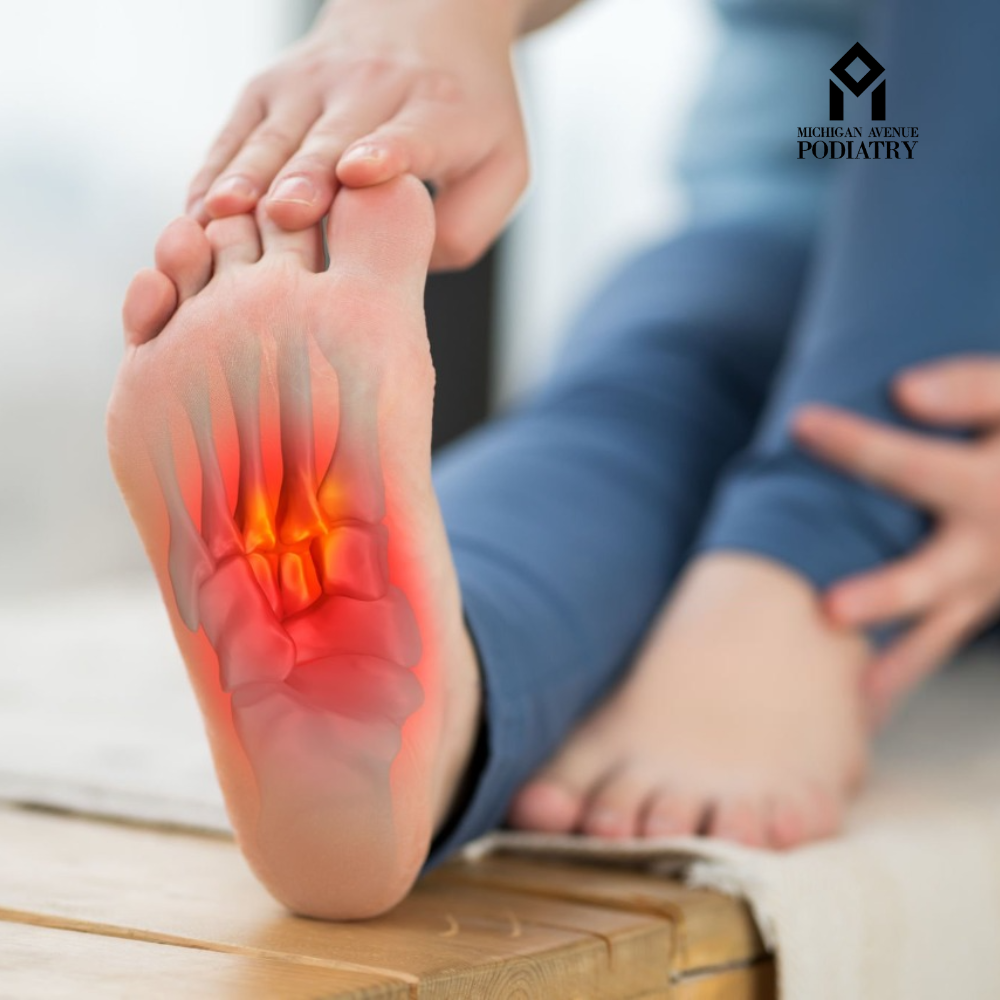
What Is Plantar Fasciitis?
Plantar fasciitis is the most common cause of heel pain in adults, accounting for roughly 1 million office visits per year in the United States. The condition occurs when the plantar fascia — a thick band of connective tissue that runs from the heel bone (calcaneus) to the base of the toes — develops microtears and chronic inflammation at its attachment to the heel.
Repetitive stress from standing, walking, or running creates cumulative strain on the fascia. Over time, the tissue degenerates rather than heals — a process clinicians now call plantar fasciosis to reflect the degenerative (rather than purely inflammatory) nature of chronic cases.
Risk factors include obesity, prolonged standing on hard surfaces, high arches or flat feet, tight calf muscles, sudden increases in physical activity, and unsupportive footwear. Without treatment, plantar fasciitis often becomes a chronic condition that limits daily activity and quality of life.
Common Symptoms
Recognizing the signs of plantar fasciitis early leads to faster recovery and better outcomes.
Morning Heel Pain
The most classic symptom: a sharp, stabbing pain in the heel when you take your first steps after waking. The fascia tightens overnight and is suddenly stretched as you stand.
Stabbing Sensation at the Heel
Pain focused directly at the underside of the heel, often described as stepping on a stone or a knife. It may radiate into the arch of the foot.
Pain After Prolonged Sitting
After resting, rising from a chair or car triggers renewed sharp pain. The fascia re-tightens at rest — then is suddenly loaded again, reproducing the inflammation response.
Arch Pain & Tightness
Aching or burning along the arch of the foot, particularly toward the heel. In some patients, the entire bottom of the foot feels tight or inflamed.
Pain That Worsens With Activity
Discomfort that increases during or after prolonged walking, standing, climbing stairs, or running — and may ease briefly with movement before returning after rest.
Heel Tenderness to Touch
Pressing on the inside edge of the heel bone produces sharp tenderness — a reliable clinical indicator that the plantar fascia attachment site is inflamed.
Treatment Options
Our conservative-first approach means most patients find relief without surgery. We tailor every treatment plan to your specific condition.
Custom Foot Orthotics
Prescription-grade devices made from a precise 3D scan of your foot redistribute pressure away from the inflamed fascia, correct biomechanical imbalances, and provide lasting arch support. Unlike over-the-counter insoles, custom orthotics are engineered for your specific anatomy, weight, and gait pattern.
Shockwave Therapy (ESWT)
Extracorporeal shockwave therapy uses high-energy acoustic pulses to stimulate tissue healing, increase blood flow, and break down calcifications at the heel. Clinically proven for chronic plantar fasciitis resistant to conservative treatment for 3+ months.
Corticosteroid Injections
Targeted cortisone injections into the plantar fascia attachment deliver powerful anti-inflammatory medication directly to the source of pain. Results are often felt within 48–72 hours. Used strategically — excessive injections can weaken the fascia.
PRP Therapy (Platelet-Rich Plasma)
PRP harnesses your body’s own growth factors to accelerate healing of chronic plantar fascia tears. A small blood sample is processed to concentrate platelets, which are then injected into the damaged tissue under ultrasound guidance.
Night Splints
Night splints hold the foot in a dorsiflexed position while you sleep, maintaining a gentle, continuous stretch on the plantar fascia and Achilles tendon overnight. This prevents the fascia from shortening and reduces morning heel pain.
Physical Therapy & Stretching
A structured home stretching program targeting the plantar fascia, Achilles tendon, and calf muscles — combined with gait analysis and strengthening exercises — addresses the root biomechanical causes of plantar fasciitis.
Surgical Release (Last Resort)
Plantar fasciotomy — a minimally invasive procedure to partially release the plantar fascia from the heel bone — is considered only after at least 9–12 months of conservative treatment has failed. Success rates are high (~90%) but recovery takes 6–10 weeks.
Why 90% of Patients Avoid Surgery
Plantar fasciitis has an excellent prognosis when treated with the right combination of evidence-based interventions. Our conservative-first approach means most patients never need an injection — let alone an operating room.
- Early intervention with orthotics and shockwave therapy resolves most cases within 6–12 weeks
- ESWT has demonstrated 70–80% success rates for chronic cases resistant to standard care
- PRP injections promote durable tissue repair — not just temporary pain relief
- Gait correction with custom orthotics prevents recurrence after recovery
- Our multi-modal approach avoids repeat cortisone injections that weaken fascia tissue
Avoid Surgery
ESWT Success
Avg Recovery
Chicago Locations
Our Locations
Four convenient Chicagoland offices for plantar fasciitis treatment.
Michigan Avenue — Chicago
30 North Michigan Avenue, Suite 1220, Chicago, IL 60602
Mon–Fri 8am–5pm
Elmhurst, IL
277 North York Street, Elmhurst, IL 60126
Mon–Fri 9am–5pm
Flossmoor, IL
19801 Governors Hwy #150, Flossmoor, IL 60422
Mon–Fri 9am–5pm
Tinley Park, IL
6703 W 159th Street, #107, Tinley Park, IL 60477
Mon–Fri 9am–5pm
Plantar Fasciitis Treatment Cost & Insurance
Plantar fasciitis treatment — from cortisone injections to custom orthotics to shockwave therapy — is covered by most major insurance plans. Because most patients are treated conservatively (without surgery), out-of-pocket costs are typically limited to your specialist copay and any deductible.
What Insurance Typically Covers
- ✓Office visits and physical examination — covered under most plans
- ✓Cortisone (steroid) injections — typically covered
- ✓Custom orthotics — covered by many PPO plans with qualifying diagnosis
- ✓Shockwave therapy (ESWT) — covered by select plans; we verify in advance
- ✓PRP injections — coverage varies; we confirm prior to treatment
What Affects Your Out-of-Pocket Cost
- ·Your plan’s specialist copay and deductible status
- ·Whether custom orthotics are a covered benefit on your plan
- ·Number of treatment visits required
- ·Imaging (X-ray or ultrasound) if ordered
Find out what your plan covers before your first visit.
We verify your benefits before your first visit — no surprise bills.
Custom orthotics require a qualifying diagnosis for insurance coverage. We document your clinical need as part of your exam.
Frequently Asked Questions
Common questions about plantar fasciitis treatment at Michigan Avenue Podiatry.
Schedule Your Plantar Fasciitis Consultation Today
Don’t let heel pain limit your life. Call or book online for an appointment at any of our four Chicagoland locations. Same-day and next-day appointments are frequently available.
Medically reviewed by Dr. Mohammad Usman, D.P.M. — Podiatric Physician & Foot & Ankle Surgeon. Featured in Forbes, CNN, The Wall Street Journal, Bustle, and Medscape.