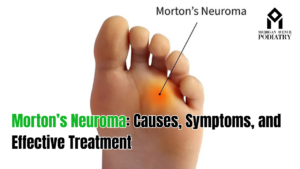
For many patients with Morton’s neuroma, the prospect of foot surgery is intimidating—not just because of the procedure itself, but because of the recovery. Weeks in a surgical boot, restricted activity, stitches to protect. Fear of that downtime is one of the most common reasons patients delay seeking treatment. Cryosurgery changes that calculus significantly. Dr. Mohammad Usman, DPM, performs cryoablation for Morton’s neuroma at Michigan Avenue Podiatry in Chicago, and understanding what recovery actually looks like after this procedure can help you decide whether this minimally invasive option is right for you.
Ready to End Your Neuroma Pain?
Dr. Mohammad Usman performs cryoablation at Michigan Avenue Podiatry in Chicago. Cash-pay procedure — no surgical facility needed.
Schedule a Consultation Call (312) 701-0770Immediately After the Cryosurgery Procedure
When the procedure ends, a small adhesive dressing is applied over the puncture site—typically 3–5 mm in diameter, comparable to a pinhole. There are no sutures. The local anesthetic administered before the procedure will keep the area numb for approximately two to four hours after you leave the office.
Most patients are able to walk out of the office immediately following the procedure. You can drive home the same day in most cases. Mild soreness and minor swelling around the puncture site is normal and expected as the local anesthetic wears off. Most patients describe the post-procedure discomfort as significantly less than what they anticipated.
Dr. Usman emphasizes that the same-day discharge and immediate ambulation are intentional design features of the procedure: “There’s no surgical wound to protect and no anesthesia hangover to sleep off. The goal is for patients to leave the office feeling like themselves—just with a small bandage on their foot.”
Walk Out the Same Day
Cryoablation at Michigan Avenue Podiatry is a 15-minute in-office procedure. Dr. Mohammad Usman will review your case and discuss whether you are a candidate.
Schedule a Consultation Call (312) 701-0770Days 1–3: Return to Normal Shoes
The first few days after cryosurgery are characterized by minor swelling around the puncture site and a gradual transition back to normal footwear. Most patients are comfortable in soft, wide-toed shoes within 24–48 hours and return to their regular shoes by day three.
Key guidelines during this phase:
- Wear comfortable, well-cushioned footwear—avoid high heels and narrow-toed shoes for the first week
- Keep the puncture site dry for 48 hours—avoid pools, hot tubs, and submerging the foot
- No stitches to protect or remove—the puncture site closes on its own within 24–48 hours
- Over-the-counter pain relief (ibuprofen or acetaminophen) as needed for mild discomfort
- Avoid tight-fitting athletic shoes until swelling has fully resolved, typically by day 5–7
Weeks 1–2: Resuming Activity
By the end of the first week, most cryosurgery patients have returned to their normal daily routine. Walking, light errands, and desk work are all comfortable. Patients with jobs that involve prolonged standing may want to budget two to three days of reduced activity, but most sedentary and office workers return the same day or the following day.
Light exercise—cycling, swimming after the 48-hour wound-care window, and low-impact walking—is typically appropriate by week two. High-impact activities such as running, jumping, and court sports should be avoided until weeks three to four, when the foot has had adequate time to recover. A follow-up appointment with Dr. Mohammad Usman is scheduled at six weeks to formally assess the neuroma’s response to treatment.
- Day 0: Walk out of the office; drive home
- Days 1–3: Return to normal shoes; light daily activity
- Days 3–7: Resume standing jobs; light exercise acceptable
- Weeks 1–2: Return to gym (low-impact); cycling; swimming
- Weeks 3–4: Return to running and high-impact sports
- Week 6: Follow-up appointment to assess pain relief
- Weeks 4–8: Full pain-relief effect typically realized
Months 1–6: Monitoring Results and Understanding the Healing Process
One of the unique aspects of cryosurgery is that the therapeutic effect continues to develop after the procedure. The extreme cold disrupts nerve cell membranes, and the body gradually resorbs the damaged nerve tissue over the following weeks. Most patients notice continued improvement over four to eight weeks—with some reporting ongoing gains for up to three to six months.
This gradual improvement trajectory differs from surgical neurectomy, where pain relief (when it occurs) tends to be more immediate post-surgically but requires a longer period of wound healing before the foot feels functional. With cryosurgery, the foot is functional almost immediately—but the pain-relief benefit deepens over time as the disrupted axons undergo Wallerian degeneration and the nerve tissue resorbs.
Clinical studies report that 77–98% of appropriately selected patients achieve significant and sustained pain reduction. For the approximately 15–20% of patients who experience only partial relief, a second cryosurgery session is an option. Dr. Usman will assess your six-week response and discuss whether additional treatment is appropriate.
Questions About Cryosurgery Recovery?
Dr. Mohammad Usman performs cryoablation at Michigan Avenue Podiatry in Chicago and will walk you through exactly what to expect before, during, and after the procedure.
Schedule a Consultation Call (312) 701-0770Frequently Asked Questions About Cryosurgery Recovery
Can I walk right after cryosurgery?
Yes. Most patients walk out of the office after the procedure. There are no incisions or stitches, so weight-bearing is permitted immediately with comfortable shoes. The local anesthetic keeps the foot numb for two to four hours post-procedure.
When can I return to work after cryosurgery?
Most patients return to sedentary or light-activity jobs the same day or next day. Jobs requiring prolonged standing may require 2–3 days off. Jobs requiring heavy labor or significant time on your feet may require a week of modified duty.
Will I need a second cryosurgery treatment?
Approximately 15–20% of patients benefit from a second session, particularly if the initial response is partial. Your follow-up appointment with Dr. Mohammad Usman at 6 weeks will determine whether a second treatment is appropriate. Because the nerve is preserved (not removed), repeat treatment is technically feasible.
How do I know if cryosurgery is working?
Patients typically notice reduced pain when pressing on the neuroma site within 2–4 weeks. Full effect develops over 4–8 weeks as the disrupted nerve tissue undergoes Wallerian degeneration and resorbs. The most common sign of early success is decreased burning and electric-shock sensations in the ball of the foot during walking.
Is there numbness after cryosurgery?
Temporary numbness or altered sensation in the area of the treated nerve is common in the weeks following cryosurgery and is part of the normal healing process. For most patients, this diminishes over 4–8 weeks. Permanent numbness in the treated interspace is possible but typically mild and well-tolerated.
When can I run after cryosurgery?
Most patients can resume running and high-impact activity at weeks 3–4, once the puncture site has fully healed and swelling has resolved. Dr. Usman will confirm this timeline at your follow-up based on your individual recovery.
How does cryosurgery recovery compare to open neuroma surgery recovery?
Open neurectomy requires stitches, a surgical wound, and 4–6 weeks before returning to normal shoes and unrestricted activity. Cryosurgery patients return to normal shoes in approximately 3 days and to full activity in 1–2 weeks. There are no stitches, no surgical wound, and no need for a surgical facility or general anesthesia.
Dr. Mohammad Usman, DPM performs cryosurgery/cryoablation for Morton’s neuroma at Michigan Avenue Podiatry’s Chicago office. He will review your imaging, explain what recovery looks like for your specific case, and answer your questions before any decision is made. Cash-pay procedure — no surgical facility required.
Request a Consultation (312) 701-0770Michigan Avenue Podiatry — 30 North Michigan Avenue, Suite 1220, Chicago, IL 60602
For a complete overview of the cryosurgery procedure—how it works, the mechanism of action, and who is a candidate—visit our page on cryosurgery for Morton’s neuroma. To compare cryosurgery and open neurectomy side by side, see our guide on cryosurgery vs. neuroma surgery. To schedule a consultation at Michigan Avenue Podiatry’s Chicago office, call (312) 701-0770.