Effective Neuroma Treatment in Chicago, IL – Expert Care & Lasting Relief
Foot pain can be surprisingly disruptive—especially when it’s caused by something as small as a nerve issue between your toes. One common culprit is Morton’s neuroma, a thickening of the nerve tissue that can make every step feel like you’re walking on a pebble. At Michigan Avenue Podiatry, Dr. Mohammad Usman, DPM leads our neuroma treatment program and helps patients across Chicagoland find lasting relief without surgery whenever possible.
We see patients with neuromas almost every week at our Chicago office. The good news is that with the right neuroma treatment, most people find long-term relief without open surgery. In this guide, we break down what causes neuromas, how to recognize them, the most effective treatments available—from conservative approaches to minimally invasive procedures—and how to prevent recurrence.
Ready to Relieve Your Neuroma Pain?
Dr. Mohammad Usman, DPM evaluates and treats Morton’s neuroma at Michigan Avenue Podiatry in Chicago. Most patients achieve lasting relief without surgery. Cash-pay procedures available — call to discuss pricing and availability.
Book a ConsultationCall (312) 701-0770Understanding Neuromas and Why They Develop
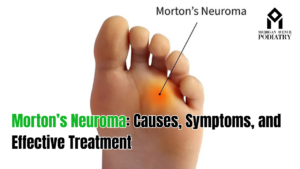
A neuroma is a swollen or irritated nerve. In the foot, it most often develops between the third and fourth toes, a condition known as Morton’s neuroma. When the nerve between your toes becomes compressed or inflamed, it can cause sharp or burning pain, tingling, or numbness.
People with certain foot shapes—like flat feet, high arches, or hammertoes—are more likely to develop this condition because of the uneven pressure on their nerves. Wearing tight shoes, high heels, or shoes that squeeze your toes together can make the problem worse. Over time, the nerve tissue thickens, leading to constant discomfort.
Typical symptoms of neuromas in the feet include:
- Sharp, burning pain in the ball of the foot
- Numbness or tingling between the toes
- A feeling as if you’re standing on a small stone or marble
- Pain that worsens with tight shoes but eases when barefoot
Ignoring these symptoms can allow the condition to worsen, sometimes leading to chronic nerve damage. Early diagnosis and proper neuroma treatment make a big difference in recovery and long-term comfort.
Diagnosing Morton’s Neuroma – What to Expect
When you visit a podiatrist for neuroma treatment in Chicago, the first step is a thorough examination. Dr. Mohammad Usman, DPM will press on the ball of your foot, check for tenderness, and ask about your symptoms and footwear habits.
In some cases, diagnostic imaging such as ultrasound or MRI may be ordered. These tools help confirm the diagnosis and rule out other causes like stress fractures or arthritis. Ultrasound in particular allows real-time visualization of the nerve and surrounding soft tissue—and at Michigan Avenue Podiatry, ultrasound guidance is available to improve diagnostic accuracy.
Getting the diagnosis right is key. When caught early, many people respond well to non-surgical Morton’s neuroma treatments like footwear changes, orthotics, or anti-inflammatory therapy. The earlier the nerve is treated, the better the chances of avoiding surgery.
The Most Effective Neuroma Treatments
There isn’t a single approach that works for everyone. The best treatment plan depends on how advanced the neuroma is and how your body responds to therapy. Below are the most effective options, ranging from conservative care to advanced minimally invasive procedures offered by Dr. Mohammad Usman, DPM at our Chicago clinic.
1. Footwear Modifications
Changing your shoes is often the first step. Choose shoes with a wide toe box, low heels, and plenty of cushioning. Avoid tight or narrow footwear that puts pressure on the ball of your foot. For some patients, switching shoes alone can significantly reduce pain—especially when the neuroma is caught early.
2. Custom Orthotics
Custom orthotic inserts are designed to reduce pressure on the affected nerve. They help realign the foot and distribute weight evenly, preventing further irritation. Orthotics are a cornerstone of neuroma treatment because they address the underlying mechanical cause rather than just relieving symptoms.
3. Anti-Inflammatory Medications and Injections
Over-the-counter pain relievers such as ibuprofen can help reduce inflammation. For more severe cases, a podiatrist may recommend corticosteroid injections to directly target the inflamed nerve. These injections can provide relief that lasts for weeks or even months and are often the bridge treatment while other therapies take effect.
4. Morton’s Neuroma Natural Treatments
Some patients prefer to start with natural methods to ease discomfort. These may include applying ice to reduce swelling, massaging the ball of the foot to improve circulation, performing gentle stretching exercises, and using metatarsal pads to relieve pressure on the nerve. Natural treatments can be effective for mild cases or as part of a broader care plan, but they work best in combination with professional evaluation.
5. Minimally Invasive Options: Cryoablation, Radiofrequency Ablation, and ESWT
Advancements in podiatric medicine have introduced several minimally invasive procedures that deliver excellent results without open surgery. At Michigan Avenue Podiatry, Dr. Mohammad Usman, DPM offers these advanced options for patients who have not responded to conservative care:
- Cryoablation (cryosurgery): Uses extreme cold delivered through a small ultrasound-guided probe to disrupt the nerve tissue causing pain. Unlike neurectomy, which removes a segment of the nerve, cryoablation disrupts the nerve without excision—eliminating the risk of stump neuroma and enabling faster recovery. Most patients return to normal shoes within three days.
- Radiofrequency ablation: Uses controlled heat to deactivate the painful nerve. Performed under local anesthetic with real-time imaging guidance.
- Shockwave therapy (ESWT): Stimulates healing and reduces chronic inflammation in the nerve and surrounding tissue.
These minimally invasive neuroma treatments are available at our Chicago office and can often restore comfort quickly with little downtime.
Explore Minimally Invasive Neuroma Options
Dr. Mohammad Usman offers cryoablation, radiofrequency ablation, and corticosteroid injections for neuroma pain at our Chicago office. No open surgery required in most cases. Contact us to discuss which option is right for you.
Book a ConsultationCall (312) 701-07706. Surgical Options
If pain continues despite non-surgical treatments, Dr. Mohammad Usman may discuss surgical options. Surgery involves either releasing the tissue around the nerve or removing the affected portion entirely (neurectomy). While surgery typically offers lasting relief, it is reserved for cases where all conservative and minimally invasive treatments have been exhausted. Potential risks include numbness in the affected toes and, in rare cases, stump neuroma formation.
Conservative vs. Surgical Treatment: What the Evidence Says
Research consistently shows that the majority of patients with Morton’s neuroma—roughly 60–80%—achieve adequate relief through conservative measures when these are pursued diligently and consistently. The key is early intervention and adherence to the treatment plan. Patients who see a podiatrist early, modify their footwear, use orthotics, and pursue injection therapy when needed typically have the best outcomes without ever requiring surgery.
For patients who do not respond to conservative care, minimally invasive procedures like cryoablation offer an intermediate option that avoids open surgery. Surgical neurectomy, while effective in approximately 80–85% of properly selected cases, carries risks of permanent numbness and is generally recommended only as a last resort.
Cryosurgery: A Minimally Invasive Option for Neuroma Pain
For patients who prefer to avoid open surgery, cryosurgery—also called cryoablation or cryoneurolysis—offers a compelling alternative. The procedure uses extreme cold delivered through a small ultrasound-guided probe to disrupt the nerve tissue responsible for neuroma pain. Unlike neurectomy, which surgically removes a segment of the nerve, cryosurgery disrupts the nerve without excision, eliminating the risk of stump neuroma formation and enabling a dramatically shorter recovery.
Michigan Avenue Podiatry performs cryosurgery for Morton’s neuroma at our Chicago office. The procedure is completed in approximately 15 minutes, requires no stitches, and allows most patients to return to normal shoes within three days. To learn more about the procedure, eligibility criteria, and what to expect, visit our cryosurgery for Morton’s neuroma page.
Recovery and Long-Term Foot Care
Recovery from neuroma treatment involves more than just symptom relief. It’s about protecting your feet long-term and preventing the condition from returning.
- Ease back into activity: Avoid high-impact sports until your doctor approves.
- Wear supportive footwear: Continue using shoes that offer good cushioning and proper fit.
- Keep your feet strong: Regular stretching and strengthening exercises help maintain flexibility and balance.
- Schedule follow-ups: Regular checkups with Dr. Mohammad Usman, DPM help monitor progress and prevent recurrence.
Same-Week Neuroma Evaluation
Michigan Avenue Podiatry has 4 Chicagoland locations. Dr. Mohammad Usman, DPM can often see new neuroma patients within the week. Call (312) 701-0770 or book online to schedule your evaluation.
Book a ConsultationCall (312) 701-0770FAQs About Neuroma Treatment in Chicago
1. How can I recover from a neuroma quickly?
Early diagnosis and consistent care make recovery faster. Wear comfortable shoes, use orthotics, and follow your podiatrist’s recommendations. Advanced options like cryotherapy or radiofrequency ablation can also shorten recovery time significantly.
2. Are there natural remedies for Morton’s neuroma?
Yes. Natural treatments such as ice therapy, rest, gentle stretching, and foot massage can relieve pain. However, they are most effective when combined with professional medical care from a podiatrist like Dr. Mohammad Usman, DPM.
3. What are the latest treatments for Morton’s neuroma?
Minimally invasive options include cryoablation, radiofrequency ablation, and shockwave therapy (ESWT). These treatments are highly effective, require little recovery time, and avoid open surgery. Dr. Mohammad Usman offers these procedures at Michigan Avenue Podiatry in Chicago.
4. When should I consider surgery for my neuroma?
If conservative treatments and minimally invasive procedures fail to relieve pain after several months, surgery may be recommended. It’s generally considered only when other methods haven’t worked. Dr. Usman will discuss all options with you before recommending surgery.
5. Can a neuroma go away on its own?
In some mild cases, symptoms may improve with rest and footwear changes. However, most neuromas require professional treatment to prevent long-term nerve damage and progressive worsening.
Conclusion: Find Lasting Neuroma Relief at Michigan Avenue Podiatry
Living with a neuroma can make even simple movements painful, but it doesn’t have to stay that way. With the right treatment plan and expert care from Dr. Mohammad Usman, DPM, long-lasting relief is possible. From natural therapies to innovative minimally invasive procedures like cryoablation, today’s neuroma treatments give patients more options than ever before.
If you’re in Chicago, IL, and dealing with foot pain that feels like you’re walking on a pebble, don’t wait. Schedule a visit with our podiatry team—early intervention can prevent further nerve damage and help you return to pain-free movement sooner.
Contact Dr. Usman Directly
Dr. Mohammad Usman, DPM — Board-Certified Podiatric Physician & Foot and Ankle Surgeon. Michigan Avenue Podiatry, 30 N. Michigan Ave. Suite 1220, Chicago, IL 60602. Cash-pay and insurance options available — call to discuss.
Book a ConsultationCall (312) 701-0770Call Us Today: (312) 701-0770
Visit Us: 30 North Michigan Avenue, Suite 1220, Chicago, IL 60602
Podiatrist in Chicago Downtown
Related Services at Michigan Avenue Podiatry